From September 16 to 17, Professor Daniel Zizzo, Dean of the School of Economics at The University of Queensland, Australia, and an internationally renowned behavioral and experimental economist, visited the School of Economics of Shandong University and conducted in-depth exchanges with the school's leaders, teachers and students.
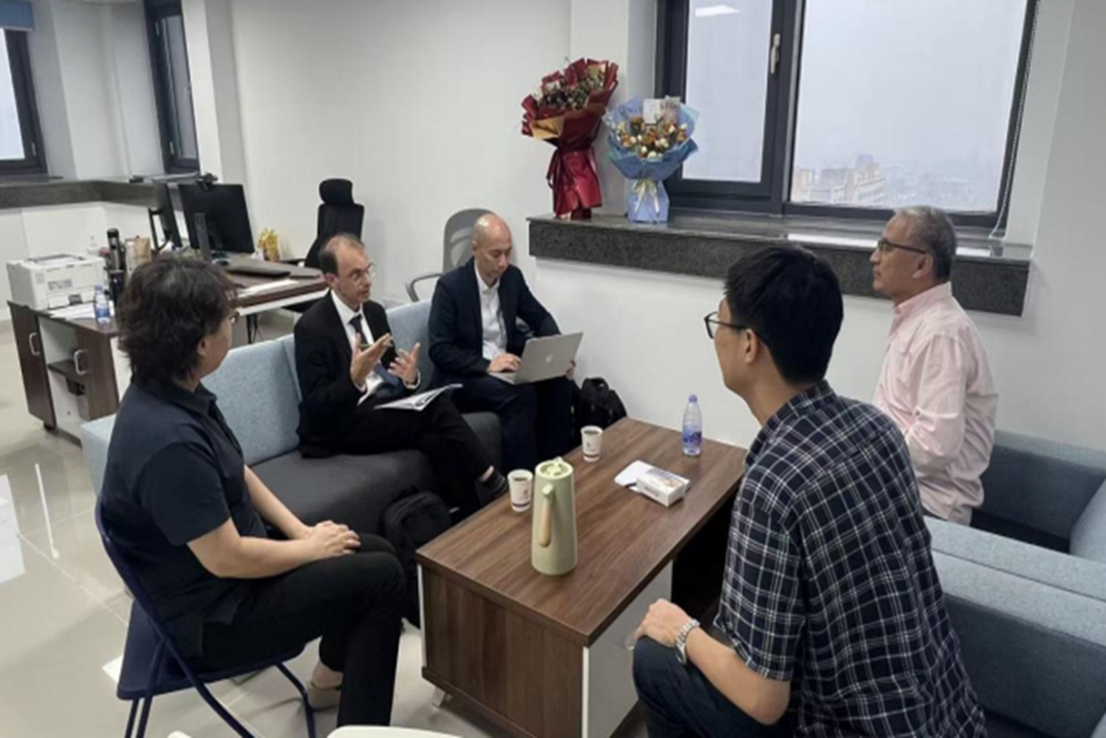
On the afternoon of the 16th, Lin Ping, Dean of the School of Economics, met with Professor Zizzo. The two parties comprehensively reviewed the phased achievements of the undergraduate "2+2" joint training program, the international joint training program for innovative postgraduate talents and other projects, and fully exchanged ideas on cooperation initiatives such as teacher and student mutual visits and scientific research internships. Both parties stated that they will sign the new round of agreements as soon as possible to promote the cooperation between the two schools to achieve new progress and reach a new level.
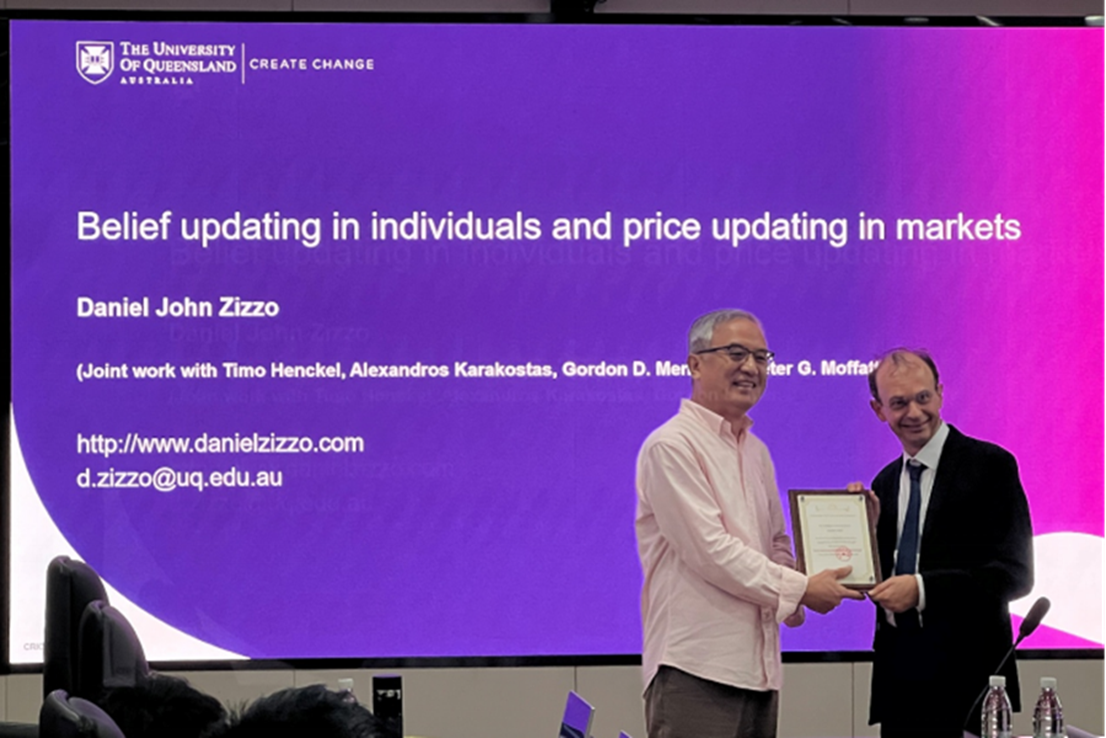
After the exchange seminar, Professor Zizzo was invited to give an academic report titled "How Do Markets and Individuals Respond to New Information?" at the 353rd Advanced Economics Lecture of the School of Economics. Lin Ping presided over the report and awarded Professor Zizzo a lecture honorary certificate. In the report, Professor Zizzo used a controlled laboratory experiment to compare the response differences of the same individual under two scenarios—independent decision-making and participation in market transactions—and the market to the same information flow when facing new information. The research found that there is obvious belief conservatism at both the individual and market levels: individuals update their beliefs to a limited extent, while the overall market response is more sluggish. In addition, there is no correlation between individuals' tendency to change their beliefs and the overall market behavior. During the report, Professor Zizzo conducted in-depth discussions with participating teachers and students on issues such as model parameter setting, experimental design, and data endogeneity.
During the visit, Professor Zizzo visited the Brain-like Economics Research Center of Shandong University and had face-to-face in-depth exchanges with postgraduates who intend to study for a doctoral degree abroad. This visit not only brought cutting-edge research on behavioral and experimental economics to teachers and students of the School of Economics, but also laid a solid foundation for in-depth cooperation between the two schools in talent training, teacher mutual visits, scientific research cooperation and other fields.



